
We Should All Be Worried About Irregular Periods
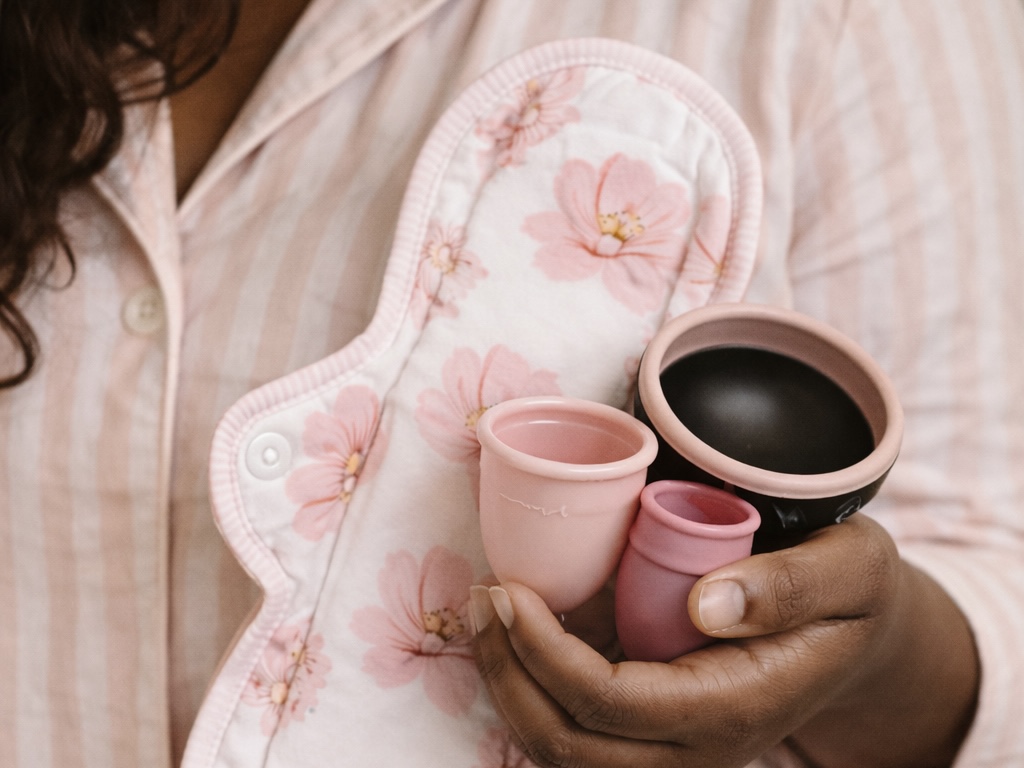
Because your cycle is not just a monthly guest — it is a whole conversation your body is trying to have with you.
Let's be honest...
If you grew up in a Black or African household, you probably learned very quickly that periods are "just something women go through."
Pain? Normal. Heavy flow? Normal. Skipping a month? "Ah, your body is just adjusting."
Doctors dismiss you, aunties minimise you, and Google confuses you.
But here is the truth: no one taught us.
Irregular periods are not a personality trait. They are a health signal. And we need to take them seriously.
Your cycle is one of the most honest storytellers your body has — every late period, every skipped month, every random spotting session is your hormones trying to send you a message. Understanding these signals empowers you to take control of your health.
The problem is that most of us were never given the language, education, or support to decode that message.
So today? We are changing that. We are ushering in a new era where menstrual health is not just a "women's issue", but a global health priority.
Let us talk about irregular periods — globally, across Africa, and most importantly, here at home in South Africa.
1. Globally: What the world already knows (and we are catching up to)
Worldwide, an estimated 14–25% of women of reproductive age experience irregular menstrual cycles. That is up to one in four women.
Internationally, the conversation is shifting. Researchers are finally saying what women have been saying forever:
"My period is telling me something."
The Apple Women's Health Study, run with Harvard T.H. Chan School of Public Health, found that women with persistently irregular cycles have a higher risk of:
- Heart disease and heart attacks
- Stroke
- High blood pressure
- Type 2 diabetes
- Certain heart rhythm problems
- Hormonal conditions like PCOS
- Fertility challenges
- Mood changes, including depression and fatigue
It is giving: "Your period is literally a vital sign."
And it is.
Professional bodies like the American College of Obstetricians and Gynecologists now explicitly describe the menstrual cycle as a vital sign — just like heart rate or blood pressure.
But because it is seen as "women's business", the world has not treated it that way.
2. Across Africa: The burden hits different
Now zoom in on the continent.
Across multiple African countries, menstrual irregularities among adolescents are estimated to range between 12.5% and 55%. That is a massive spread, shaped by differences in context, nutrition, and healthcare access.
And the reasons are not "weak wombs" or "bad luck". The real culprits often look like this:
- Chronic stress
- Low sleep and overwork
- Period stigma and silence
- Food insecurity and anaemia
- Limited access to reproductive healthcare
- Side-effects of contraception that are not properly explained
A recent narrative review found that 10–30% of African women experience heavy menstrual bleeding — the kind that leaves you dizzy, exhausted, and constantly calculating how many pads you will need to survive the day.
On top of that, reviews of menstrual health management in East and Southern Africa show how stigma, poverty, and poor infrastructure combine to make periods a monthly crisis for many girls.
Because African girls are raised to "push through", we end up ignoring symptoms that genuinely require medical attention.
3. South Africa: Our menstrual health story (that nobody is telling)
This is the part that hits home.
As South African women, we deserve data that actually reflects our lives — our languages, our schools, our clinics, our stress.
When you look at the research that does exist, it is eye-opening.
Rural high school girls in Limpopo
Studies among secondary school girls in Limpopo show that many learners:
- Have limited menstrual health knowledge
- Struggle with pain and heavy bleeding
- Miss school during their periods
- Rarely talk to healthcare providers about it
For many girls, irregular or heavy periods are simply labelled "normal womanhood" — not something worth a clinic visit.
University students in South Africa
Research with undergraduate women at South African universities shows that:
- Stress, academic pressure, poor sleep and financial strain all influence menstrual experiences
- Many students report menstrual disturbances (pain, irregularity, heavy flow) that disrupt their daily lives
- Healthcare encounters can feel dismissive or rushed
- Very few students have ever been taught how to track their cycles or recognise when something is off
Sound familiar?
Women across SA — all backgrounds
Newer surveys and campaigns focused on hormonal health suggest that around a third of South African women report symptoms like irregular cycles, sleep disturbance, mood changes, and fluctuating energy, all linked to hormonal imbalance.
Clinicians and advocates also note that:
- Black African women are more likely to experience fibroids and heavy bleeding
- Health-system inequalities, long queues and cost barriers delay diagnosis
- Cultural silence around periods means many women minimise or hide their symptoms
Your cycle is literally a reflection of your life — your stress levels, your sleep, your nutrition, your medication, your environment.
Women on Hajj (South African pilgrims)
Even in spiritual settings, the body has a voice.
South African women on pilgrimage often report:
- Cycle disruption
- Unpredictable bleeding
- Stress-induced irregularity
Your environment (travel, heat, disrupted routine, intense emotion) can influence your hormones — not just your ovaries.
4. Pop culture is catching up: "Your period does not lie."
On Steven Bartlett's Diary of a CEO, women's health experts did not mince their words:
"If your period is irregular, something is wrong."
"Missing periods is harmful to your long-term health."
"Women are being gaslit into believing period issues are normal."
"Birth control can mask symptoms without addressing the cause."
They spoke about insulin resistance, cortisol spikes, over-exercising, fasting, chronic stress — and how all of these impact the menstrual cycle.
Basically: your period does not lie. It never has.
5. So... when should you actually worry?
Let us break it down like a friend would.
You should pay attention if:
- Your cycle is shorter than 21 days
- Your cycle is longer than 35 days
- You regularly skip months
- Your period disappears for 3+ months (and you are not pregnant or breastfeeding)
- Your flow suddenly becomes much heavier or much lighter
- You are constantly spotting between periods
- Your cramps become more severe over time
- You feel like your cycle has become unpredictable and chaotic
None of this is "just being a woman".
It is not a sign of weakness. It is a sign that something in your body needs attention.
It is fixable — but only if we catch it early.
6. What to do next (practical steps)
Here is where you start:
Track your cycle
Use an app like Olanna, or a notebook, or a simple calendar. Write down: start date, flow, pain, mood, energy. Patterns matter.
Ask for blood tests
Request checks for thyroid function, prolactin, insulin, and reproductive hormones.
Screen for underlying conditions
Ask your provider about PCOS, fibroids, endometriosis, and anaemia if your symptoms fit.
Prioritise sleep
Hormones are regulated during deep sleep. Chronic late nights and screen time absolutely show up in your cycle.
Avoid extreme dieting or over-exercise
Undereating and overtraining can shut down ovulation and trigger irregular or missing periods.
Advocate for yourself
Go into appointments with notes. Use clear language:
- "My cycles are longer than 35 days and I have not had a period for three months."
- "My bleeding is so heavy I am changing a pad every hour."
Do not let anyone dismiss you — ever
If you feel brushed off, you are allowed to seek a second opinion.
Your menstrual cycle is an integral part of your overall health, not a footnote.
You deserve answers. You deserve care. You deserve to be taken seriously.
References
- 1.Eunice Kennedy Shriver National Institute of Child Health and Human Development (NICHD). What are menstrual irregularities? 2017.
- 2.Harvard T.H. Chan School of Public Health. Irregular periods linked with increased risk for cardiometabolic conditions. 2024.
- 3.Wang YX et al. Menstrual Cycle Regularity and Length Across the Reproductive Lifespan and Risk of Cardiovascular Disease. JAMA Network Open. 2022.
- 4.American College of Obstetricians and Gynecologists. Menstruation in Girls and Adolescents: Using the Menstrual Cycle as a Vital Sign. Committee Opinion. 2015.
- 5.Menstrual irregularity and associated factors among female adolescents in Africa. Scientific Reports. 2025.
- 6.Narrative review on heavy menstrual bleeding in African women, Annals of Medicine and Surgery; Madwantsi V. Understanding menorrhagia: the significant effects of heavy periods on South African women. IOL, 2025.
- 7.UNFPA. Menstrual Health Management in East and Southern Africa: A Review Paper. 2018.
- 8.Ramathuba DU et al. Menstrual knowledge and practices of female adolescents in Vhembe District, Limpopo Province, South Africa. 2015.
- 9.Crankshaw T et al. Menstrual health management and schooling experience amongst female learners in South Africa. 2020.
- 10.Padmanabhanunni A. The menstruation experience: Attitude dimensions among South African undergraduate women. 2017.
- 11.Epicentre. The Reality of Hormonal Health for South African Women. 2024.
- 12.Ask Dr Olz. What causes irregular periods? 2024.
- 13.Apple Women's Health Study and Harvard T.H. Chan School of Public Health. Menstrual cycles today: how menstrual cycles vary by age, weight, race and ethnicity. 2022.
Citations formatted in Vancouver style. These references are provided for educational purposes only.
Olanna is building a reproductive health app shaped by women like you.
Join Early AccessMedical Disclaimer
This article is for educational purposes only and does not constitute medical advice. Always consult with a qualified healthcare provider regarding any medical condition or treatment.